How to Diagnose a Hardstuck Marvel Rivals Player by Spectating Their Ranked Games
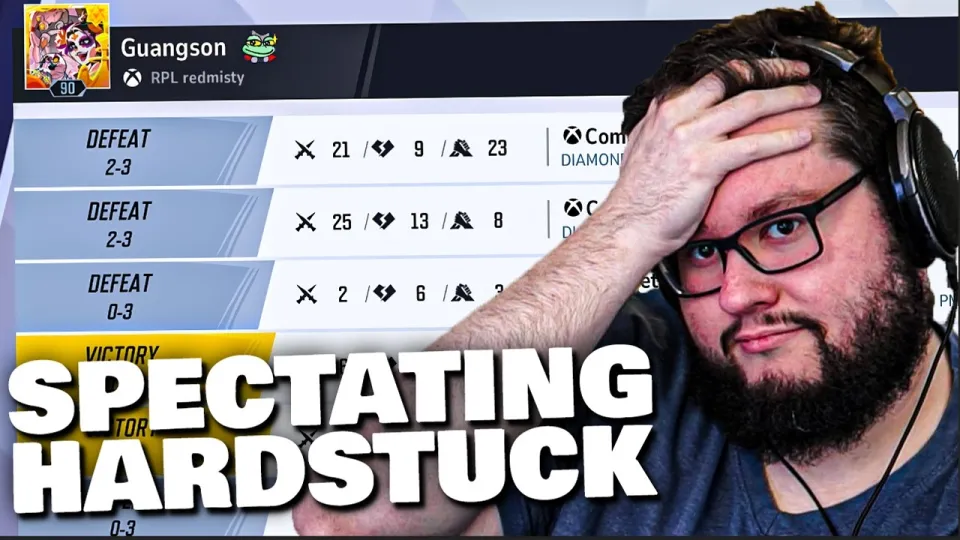
Video: I Spectated Someone Who Claimed To Be Hardstuck In Marvel Rivals
Want articles like this for your own video to promote it on YouTube and Google? Order them through the Telegram bot @sat_sit_bot. It writes articles around your video, embeds the video and publishes them on popular niche websites (no ads). Try it free: 50 articles on us.
· based on the channel Flats
Key takeaways
- Flats spectated a Marvel Rivals player who insisted his teammates were the reason he could not climb, then reviewed the gameplay live.
- The player reached Grandmaster rank despite what viewers described as a negative win rate and repeated basic mistakes.
- Key errors included holding Cloak instead of Dagger, ignoring a health pack while hunting for one, and whiffing a Magneto ultimate.
- The session became a case study in ego versus skill: the player blamed teammates while his own decisions cost fights.
- Flats streams live on Twitch, where full spectating and coaching sessions are available.
Spectating a self-declared hardstuck Marvel Rivals player is the fastest way to separate an unlucky account from a player who is repeating the same mistakes every match. Watch the replay from their own point of view, count the decisions that lose fights, and compare that list with the rank they claim to deserve. Flats did exactly this on stream, and the result was a Grandmaster-level player whose problems had almost nothing to do with matchmaking. If you want to run the same audit on yourself or a friend, you can follow the live sessions on Flats' Twitch channel, where the full spectating and review format runs in real time.
What does it mean to be hardstuck in Marvel Rivals?
Being hardstuck means your rank has stopped moving while your habits stay identical from match to match. It is not the same as being unlucky: a hardstuck player loses the same type of fight, in the same type of position, for the same reason, and then blames the team instead of the decision. The player Flats reviewed had climbed all the way to Grandmaster, which makes the label stranger, not simpler. A high rank with a losing record usually means the player was carried by a strong hero pick, a duo partner, or a lucky streak, and the fundamentals never caught up. That gap is what a spectate session exposes in minutes.
The five checks Flats uses when reviewing a hardstuck player
A spectate review works best as a checklist, because vague impressions hide the actual mistakes. Run these checks in order and write down one example for each.
- Positioning before the fight. Where does the player stand when the engagement starts? If they are already out of cover, out of healing range, or in front of their tank, the fight is lost before anyone presses a button.
- Cooldown discipline. Track the defensive and mobility abilities. A support who burns their escape to move faster, or a duelist who dives without a way out, is donating deaths.
- Ultimate value. Count how many ultimates are used with zero follow-up. In the reviewed match, a Magneto ultimate missed entirely and the character's collapse afterwards said everything about the cost.
- Resource awareness. Watch how the player handles health packs and healing. One of the most memorable moments came when the player walked straight past a health pack while clearly looking for one.
- Accountability. After each death, does the player name their own mistake or the teammate's? A review where every death is someone else's fault is a review that will never produce improvement.
Why the ego problem is bigger than the aim problem
Mechanical skill in Marvel Rivals is loud and easy to see, but ego decides how many fights you take and how fast you learn. The reviewed player opened with the claim that teammates were holding him back, and then demonstrated the opposite: his own choices created the losses he blamed on others. Viewers of the stream picked up on the pattern immediately, describing a player who reached Grandmaster while losing more than he won. That combination is common in hero shooters, because a strong pick can hide weak fundamentals for a long time. The fix is not more aim training. It is a rule that every death gets one sentence of self-criticism before anyone else is mentioned.
The hero-specific mistakes that keep players stuck
Hero choice is where hardstuck habits become visible, because each kit punishes a different kind of laziness. The most discussed example from the session was a Cloak and Dagger player who effectively played half the character: he held Cloak and rarely swapped to Dagger, which removes most of the healing output the team is counting on. Supports who stay in the damage form are not healers, they are a second duelist with a worse kit. The same logic applies elsewhere. A Rocket Raccoon chasing damage instead of keeping the team alive is a wasted slot, and a Spider-Man main who blames the team after every failed dive is repeating the stereotype viewers joked about. A useful exercise is to list the three abilities your hero must use every fight, then check the replay for how many of them actually fired.
How to run a spectate review on your own games
You can reproduce the Flats method without a coach, using nothing but your match history and twenty minutes of patience. Spectate or watch the replay of a close loss, not a stomp, because close games show decision quality clearly. Pause after every death and answer three questions out loud: what information did I have, what did I choose, and what was the alternative. Keep a tally of ultimates used with no follow-up, health packs ignored, and deaths that happened outside healing range. After five games, the tally becomes a pattern, and the pattern is your real rank. Do the same review for a win, because bad habits hide inside wins and that is how players plateau without noticing.
Common doubts from players who think their teammates are the problem
Every review session runs into the same objections, and each one has a concrete answer. "My teammates are always worse" is testable: count how many fights you lose because of your own positioning versus theirs, and the ratio is rarely what players expect. "I have a high rank, so my gameplay must be fine" ignores how many players reach high ranks on one strong hero and then stall. "I only play for fun, so improvement does not matter" is fine, but then the hardstuck label is not a complaint, it is a choice. "My hero is weak" is worth checking against actual pick and win statistics rather than memory. The honest version of the question is always the productive one: what did I control in that fight, and what will I change next time?
Where to watch the full breakdown and follow Flats
All of the official channels for the creator behind this review are listed here, and the live stream is where new spectate sessions appear first.
- Twitch (live spectating and coaching): https://www.twitch.tv/flats
- Discord community: https://discord.gg/flats
- Twitter/X updates: https://twitter.com/Flats_Ow
- TikTok clips: https://www.tiktok.com/@flats_ow
- Facebook page: https://www.facebook.com/FlatsTTV
Final thoughts on the hardstuck Marvel Rivals mindset
The spectate review works because it replaces opinion with evidence, and the evidence in this session pointed at the player, not the matchmaking. A Grandmaster badge does not protect anyone from holding the wrong half of a support kit, ignoring a health pack, or wasting an ultimate with no follow-up. The channel Flats built this breakdown around a simple idea: watch the replay honestly, name your own mistakes first, and the rank will follow the decisions. If you want more sessions like this one, the live stream at https://www.twitch.tv/flats is the place to start.
Questions & answers
Can a Marvel Rivals player really be hardstuck in Grandmaster?
Yes, and it is more common than players admit. A strong hero pick or a good run can carry someone to a high rank while their fundamentals stay at a lower level. Once the opponents punish those fundamentals consistently, the rank stops moving even though the badge looks impressive.
Why is holding Cloak instead of swapping to Dagger such a big deal?
Cloak and Dagger are designed as a pair, and most of the healing output comes from Dagger. A player who stays in Cloak form for whole fights is effectively playing a damage hero in the support slot, which leaves the team without sustained healing and loses long engagements.
How many games should I review to find out why I am stuck?
Five close games are enough to reveal a pattern. Watch the replay of each, pause after every death, and note positioning, cooldown use, ultimate value and resource awareness. If the same mistake appears in three or more games, that is the habit keeping your rank flat.
Is it worth blaming teammates if they really are playing badly?
Blaming them changes nothing about your own rank, because you cannot control their decisions. The productive version of the complaint is to ask what you could have done differently in that fight, such as better positioning or saving a cooldown for their mistake. That is the only part of the match you can improve.
Source: I Spectated Someone Who Claimed To Be Hardstuck In Marvel Rivals · Markdown version